
Migration — Full Overview
Migration — Full Overview
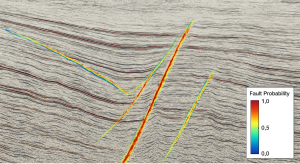 Introduction
Migration is the heart of seismic imaging. It repositions seismic reflections into their correct subsurface locations, transforming raw, unmigrated data into a coherent geological picture. Without migration, structures appear distorted, dipping reflectors are misplaced, and faults may be misinterpreted.
This article explains what migration is, how it works, and why it is essential for accurate subsurface imaging.
1. What Is Migration?
Migration is the process of moving seismic events to their true spatial positions. Because seismic waves travel through complex velocity structures, reflections recorded at the surface are not located directly beneath their receivers.
Migration corrects for:
Dipping reflectors
Diffractions
Complex velocity fields
Structural deformation
The result is a clearer, more accurate seismic image.
2. Why Migration Matters
✔ Accurate structural imaging
Faults, folds, and horizons appear in their true positions.
✔ Diffraction collapse
Point scatterers become focused, improving clarity.
✔ Better fault definition
Fault planes become sharper and easier to interpret.
✔ Improved depth accuracy
Essential for well planning and reservoir modeling.
3. Types of Migration
A. Kirchhoff Migration
Ray‑based method suitable for most datasets. Pros: Fast, flexible Cons: Limited for complex geology
B. Beam Migration
Uses localized beams to improve imaging. Pros: Good for noisy data Cons: Less accurate than RTM
C. Reverse Time Migration (RTM)
Wave‑equation method that handles complex structures. Pros: Excellent for salt, thrust belts, and deep targets Cons: Computationally expensive
D. Depth Migration
Uses depth‑domain velocities. Pros: Accurate for complex velocity fields Cons: Requires a good velocity model
4. Migration Workflow
Velocity model building
Pre‑migration conditioning
Migration algorithm selection
Migration run
Residual moveout analysis
Velocity updates
Final migration
QC and deliverables
Migration and velocity analysis are iterative — each improves the other.
5. Challenges
Poor velocity models
Complex salt bodies
Anisotropy
Noise contamination
Computational cost
Conclusion
Migration is essential for accurate seismic imaging. By repositioning reflections into their true subsurface locations, it delivers the structural clarity needed for exploration, development, and reservoir management.